


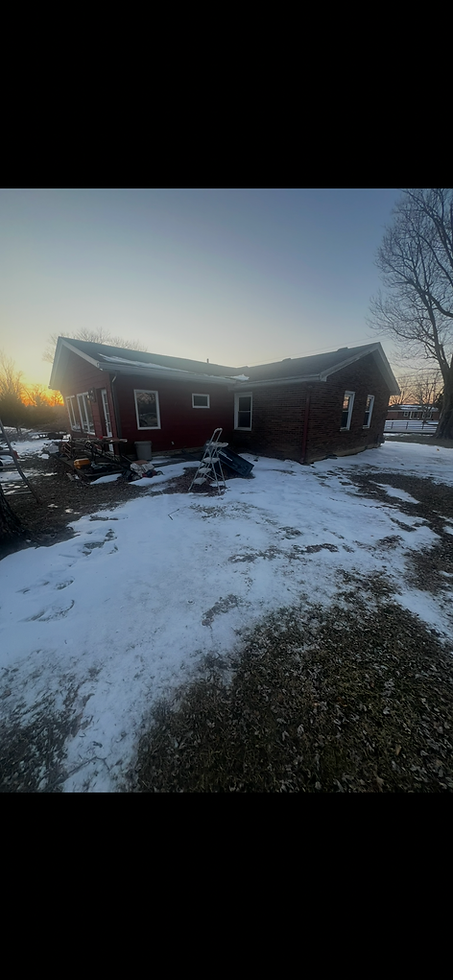
Freeze–Thaw Roof Damage in Northern Kentucky: How to Spot Hidden Leaks After Snow & Ice (2026 Guide)
- TNT Roofing and RestorationLLC
- 3 days ago
- 4 min read
If you live in Northern Kentucky or Greater Cincinnati, winter can be rough on your roof—especially when temperatures bounce above and below freezing. That “melt during the day / refreeze at night” pattern is called the freeze–thaw cycle, and it’s one of the biggest reasons homeowners suddenly notice ceiling stains, dripping, musty attic smells, or shingles out of place in January and February.
This guide breaks down:
What freeze–thaw does to shingles, flashing, and gutters
The fastest ways to spot a leak without climbing on your roof
What to document if insurance might be involved
When a repair is safe to do in winter (and when it’s smarter to stabilize first)
If you want us to check it, TNT Roofing & Restoration LLC offers free winter inspections for homeowners and property managers across Florence, Union, Fort Thomas, Covington, Newport, and Cincinnati.
Why freeze–thaw cycles cause roof leaks so fast
Freeze–thaw damage isn’t always dramatic like a tree limb crashing through. It’s usually small separations that grow over time:
1) Tiny openings get bigger when water freezes
Water expands when it freezes. If moisture gets into a small gap around flashing, a nail pop, or a shingle edge, freezing can widen that gap. Repeating that cycle can turn a “minor issue” into a leak.
2) Shingles can become brittle in cold weather
Asphalt shingles are more prone to cracking and breaking when they’re cold, which is why winter storms + high winds can expose weak spots. Manufacturers and industry sources note that cold-weather conditions can make shingles brittle and may require additional sealing methods depending on temperature and product.
3) Flashing and sealants take a beating
Flashing around chimneys, vents, skylights, valleys, and sidewalls moves differently than shingles. Temperature swings stress those joints first—exactly where many “mystery leaks” start.
The 9 warning signs your roof is leaking after snow or ice
You do not need to get on the roof to catch most problems. Here’s what to look for:
Brown/yellow ceiling stains (often near exterior walls or bathrooms)
Dripping at soffits or water streaks on siding
Granules collecting at downspout exits (looks like coarse sand)
Shingles that look lifted, crooked, or missing after wind
Dented or bent flashing around chimneys/vents
Gutters pulling away or sagging from ice load
Large icicles forming repeatedly in the same area
Musty attic smell or damp insulation
Bubbling paint on interior walls or around window tops
If you see any of these, the best move is a professional inspection + photo documentation (and if needed, a temporary stabilization until weather allows full repair).
Ice dams: what they are, and why they’re a red flag
An ice dam happens when snow melts higher up on the roof, runs toward the eaves, and refreezes—creating a ridge of ice that traps water behind it. That trapped water can back up under shingles and into the roof system.
The root cause is often a combination of heat loss + ventilation/insulation issues, not just “too much snow.” Weather and building guidance commonly recommends evaluating attic insulation and airflow to reduce the melt/refreeze pattern that forms ice dams.
Bottom line: If you’re getting recurring ice dams, you may have a roof system issue (ventilation/insulation) in addition to any exterior damage.
What to do after a winter storm (do this in order)
Step 1: Stay off the roof
Cold surfaces, frost, and ice make falls more likely. Inspect from the ground or from windows.
Step 2: Take photos + short videos
Document anything visible: missing shingles, lifted tabs, damaged flashing, gutter issues, downspout damage, interior staining. This is useful if insurance ends up involved. Major manufacturers even recommend documenting storm damage with photos/notes for potential claim support.
Step 3: Stop active water intrusion
If water is actively coming in, the priority is to prevent additional interior damage. Depending on conditions, that might be a targeted repair, a temporary cover, or a controlled stabilization approach until full work can be completed safely.
Step 4: Get a professional inspection with a written plan
A real inspection should include:
Shingle field + ridge/hip check
Flashing, penetrations, valleys
Drip edge, fascia/soffit condition
Gutters/downspouts
Attic/ventilation indicators (when accessible)
If you’re local, our Roof Repair & Storm Damage service page outlines the type of help we provide (repairs, leak diagnostics, insurance support).
Can roofing repairs be done in winter?
Yes—many repairs can be done in winter—but the correct approach depends on temperature, roof pitch, and the type of work needed.
Industry/manufacturer guidance recognizes that in cold weather, self-sealing strips may not activate immediately and certain installations may require hand-sealing/hand-tabbing or cold-weather handling practices.
That’s why you want a contractor who understands:
when a permanent fix is appropriate
when to stabilize and return during a safe window
how to document everything cleanly if insurance is part of the picture
The most common winter damage we see in Northern KY & Cincinnati
Lifted/missing shingles after wind gusts
Flashing leaks (chimneys, step flashing, pipe boots)
Nail pops that open up under freeze/thaw pressure
Gutter and fascia damage from ice load
Valley issues where meltwater concentrates
Attic ventilation problems that contribute to ice dams
If you’re seeing any of that, it’s worth getting checked now—because small winter issues often turn into bigger spring repairs.
Free winter inspection (Northern KY + Cincinnati)
If you’re in Florence, Union, Fort Thomas, Covington, Newport, Lexington, or Cincinnati, we can inspect and give you a clear plan—repair vs. replace, timeline, and options.
Call or text: 859-529-4461
Alternate: 859-529-4507
Or request an inspection through our website.
You can also review our core service pages here:
Roof Repair & Storm Damage Services
Residential Roofing Services
Commercial Roofing (property managers & multi-family)


Comments